Lotte Chemical Pakistan

Lotte Chemical Pakistan

Engineering Intelligent Infrastructure for Pakistan’s Sole PTA Manufacturer

The Site

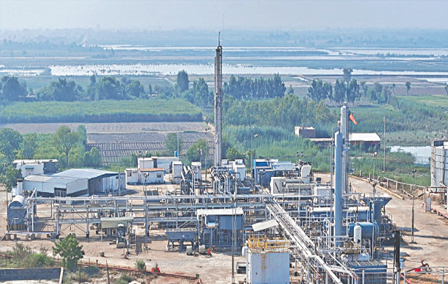
Located at Port Qasim, Karachi, Lotte Chemical Pakistan is the country’s only manufacturer of Purified Terephthalic Acid (PTA), producing up to 500,000 tonnes annually for Pakistan’s textile and packaging industries. A live, continuously operating petrochemical plant of this scale runs on precise coordination — where every process, safety protocol, and shift handover depends on communication that doesn’t fail.

The Challenge

Industrial-scale manufacturing leaves no margin for communication downtime. The plant needed:

  • Reliable voice and data connectivity across a large industrial plant footprint
  • Communication infrastructure built to hold up in a demanding industrial environment
  • Connectivity that supports safety-critical operations and round-the-clock shift coordination
  • A network built to standards suited to continuous process manufacturing

What Curve Delivered

Curve began with a full understanding of the plant’s operational layout and safety requirements — mapping process zones, control areas, and communication needs before execution. Thorough site surveys informed the design, installation was carried out in line with the plant’s safety protocols and live operations, and every system was tested and validated before handover.

  • Voice Network — reliable, plant-wide voice communication built to support continuous, round-the-clock operations
  • Data Connectivity — a resilient data network supporting monitoring, coordination, and daily operations across the facility
  • WiFi Coverage — wireless connectivity extended across designated zones of the plant for operational flexibility

In a facility where consistent operations are non-negotiable, Curve delivered communications infrastructure engineered for reliability — built, tested, and handed over to keep one of Pakistan’s key industrial plants running without interruption.
PPL Head Office

PPL Head Office

Engineering Intelligent Infrastructure for Pakistan’s Energy Backbone

The Site

Pakistan Petroleum Limited’s head office in Karachi is the corporate nerve center of one of the country’s largest oil and gas exploration and production companies — a state-owned energy major that has been powering Pakistan’s gas supply since discovering the Sui gas field in 1952, and today contributes over 20% of the country’s total natural gas. A head office coordinating operations across fields nationwide runs on connectivity that simply cannot go down.

The Challenge

Running a national energy company’s head office demands infrastructure that never breaks stride. PPL needed:

  • Reliable connectivity coordinating head office operations with field sites spread across the country
  • Communication infrastructure built for a high-stakes, always-on corporate environment
  • A network capable of supporting a large corporate workforce without compromise
  • Infrastructure matching the standards of a major national energy company

What Curve Delivered

Curve began with a full understanding of the head office’s operational requirements — mapping departments, workflows, and connectivity demands before designing the solution. Thorough site surveys informed the network design, execution was carried out with minimal disruption to daily operations, and every system was tested and validated before handover.

  • Voice Network — a reliable voice backbone connecting departments and supporting coordination between head office and field operations
  • Data Connectivity — a resilient data network built to keep a large corporate workforce productive and connected
  • WiFi Coverage — consistent wireless connectivity extended across the head office for everyday operational flexibility

For a company that keeps the country’s gas supply running, communication infrastructure had to be just as dependable. Curve delivered a network built for consistency — engineered, tested, and handed over to keep Pakistan’s energy backbone connected.

Serena Hotel Islamabad

Serena Hotel Islamabad

Engineering Intelligent Infrastructure for Islamabad’s Premier Diplomatic Hotel

The Site

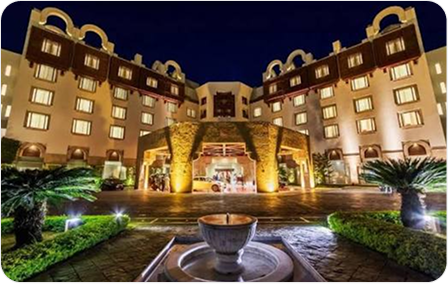
Set within a 14-acre garden near Islamabad’s Diplomatic Enclave, Islamabad Serena Hotel is the city’s premier five-star address, with 336 rooms and 51 suites that regularly host heads of state, diplomats, and dignitaries. For a hotel operating at this level, connectivity has to be invisible, unfailing, and secure enough for its most sensitive guests.

The Challenge

A hotel of this standing needed connectivity that performs flawlessly, without ever drawing attention to itself. The property required:

  • Seamless connectivity across guest rooms, conference facilities, and public areas
  • Reliability that holds up under high-profile, security-sensitive events
  • Consistent coverage across a sprawling 14-acre property, without dead zones
  • Infrastructure discreet enough to preserve the hotel’s traditional architecture and ambience

What Curve Delivered

Curve began with a full understanding of the property’s layout, guest flow, and event requirements — mapping room density, conference spaces, and outdoor areas before deployment. Thorough site surveys informed the design, installation was carried out with minimal disruption to hotel operations, and every system was tested and validated before handover.

  • Guest WiFi — seamless, high-speed connectivity across guest rooms and public areas, built to a five-star standard
  • Conference & Event Connectivity — reliable network support for the hotel’s conference rooms and high-profile events
  • Back-of-House Network — dependable connectivity tying together hotel operations, from the front desk to service teams

For a hotel that regularly hosts the country’s most important guests, connectivity had to be as dependable as it was invisible. Curve delivered a network built to perform quietly in the background — engineered, tested, and handed over to support Islamabad’s premier address for diplomacy and hospitality.

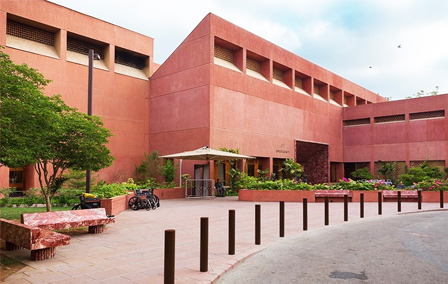
Aga Khan University Hospital

Aga Khan University Hospital

Engineering Intelligent Infrastructure for Pakistan’s Leading Academic Medical Centre


The Site

The Aga Khan University Hospital is Karachi’s largest private hospital and Pakistan’s first JCI-accredited Academic Medical Centre — a 24/7 quaternary care and teaching institution that has been treating patients and training doctors since 1985. In a hospital of this scale, communication isn’t a convenience; it’s clinical infrastructure. A dropped call or a delayed connection can mean a delayed diagnosis.

The Challenge

Hospital communications operate under a different standard than any other environment. AKUH needed:

  • A voice network reliable enough to support round-the-clock emergency and patient care
  • A contact center capable of managing high call volumes across departments without delay
  • Network infrastructure robust enough to keep every connected system running without interruption

What Curve Delivered

Curve began with a full understanding of the hospital’s operational requirements — mapping call volumes, department workflows, and uptime demands before designing the solution. Thorough site surveys informed the network design, execution was carried out with minimal disruption to a live hospital environment, and every system was tested and validated before handover.

  • PABX — a reliable voice backbone built to support uninterrupted communication across a 24/7 hospital environment
  • Contact Center — infrastructure designed to handle high call volumes efficiently, connecting patients to the right department without delay
  • Network Switches — the underlying network infrastructure keeping every connected system running reliably, department to department

In an environment where every minute matters, Curve delivered communications infrastructure built for zero downtime — engineered, tested, and handed over to keep one of Pakistan’s leading hospitals connected around the clock.

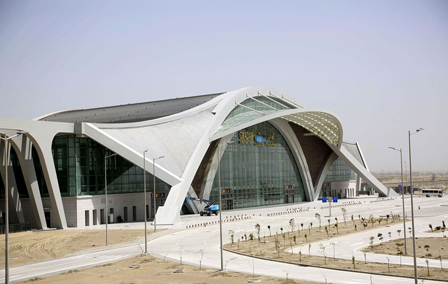
New Gwadar International Airport

New Gwadar International Airport

Engineering Intelligent Infrastructure for Pakistan’s Largest Airport

The Site

Spanning 4,300 acres, New Gwadar International Airport is Pakistan’s largest airport by land area — built to handle wide-body aircraft including the Airbus A380, as part of the China-Pakistan Economic Corridor. A greenfield site of this scale, in a strategically sensitive coastal region, demanded infrastructure built for security, resilience, and scale from day one.

The Challenge

Aviation-grade infrastructure isn’t just about coverage — it’s about zero tolerance for failure. An airport of this size needed:

  • Reliable connectivity across a sprawling, multi-zone footprint
  • Continuous surveillance across terminals, perimeter, and restricted zones
  • Perimeter protection for a high-security, nationally significant asset
  • A cabling backbone strong enough to carry all of it, without compromise

What Curve Delivered

Curve began with a full understanding of the project scope — mapping the site’s zones, security tiers, and operational requirements before a single cable was laid. Thorough site surveys informed the design, execution was carried out in phases to match the airport’s construction timeline, and every system was tested and validated before handover.

  • Voice / Data / WiFi — connectivity infrastructure engineered for a large-scale, multi-zone aviation environment, surveyed and designed zone by zone
  • CCTV — surveillance coverage built for continuous monitoring across terminals, perimeter, and restricted areas
  • Perimeter Security — electric perimeter protection suited to critical national infrastructure, tested for round-the-clock reliability
  • Network Cabling — the structured backbone tying every system together, engineered to scale with the airport’s growth

At a site where there was no room for error, Curve delivered as a single integrator — not a patchwork of vendors — with every system engineered, tested, and handed over to work together from day one.

Emaar

EMAAR Panorama

Engineering Intelligent Infrastructure for Pakistan’s Tallest Waterfront Tower

The Site

Rising 46 floors above Karachi’s Crescent Bay, EMAAR Panorama is Pakistan’s tallest waterfront residential tower — a luxury high-rise built for hundreds of families, with uninterrupted views of the Arabian Sea. A gated, vertical community of this scale brings a different kind of complexity: connectivity, surveillance, and access have to work consistently across dozens of floors and hundreds of individual units, not just a single footprint.

The Challenge

High-rise residential living raises the bar on what “seamless” has to mean. A tower of this height and unit density needed:

  • Consistent connectivity carried reliably from the basement risers to the top floor
  • Surveillance coverage across common areas, entrances, and building perimeter
  • Controlled, secure access for residents, staff, and visitors — without compromising convenience
  • Infrastructure built to match a luxury development’s standard of service

What Curve Delivered

Curve began with a full understanding of the project scope — mapping riser routes, unit density, and common-area layouts across all 46 floors before execution began. Thorough site surveys informed the design, installation was sequenced floor by floor to keep pace with construction, and every system was tested and validated before handover.

  • Voice / Data / WiFi — connectivity engineered to perform consistently across every floor and unit, from the basement to the tower’s peak
  • CCTV — surveillance coverage across entrances, common areas, and the building perimeter, built for round-the-clock monitoring
  • Access Control — secure, controlled entry for residents, staff, and visitors, balancing security with the ease of everyday living

For a landmark address, infrastructure had to be as considered as the architecture itself. Curve delivered every system as one integrated build — engineered, tested, and handed over ready for residents to move in without a second thought.